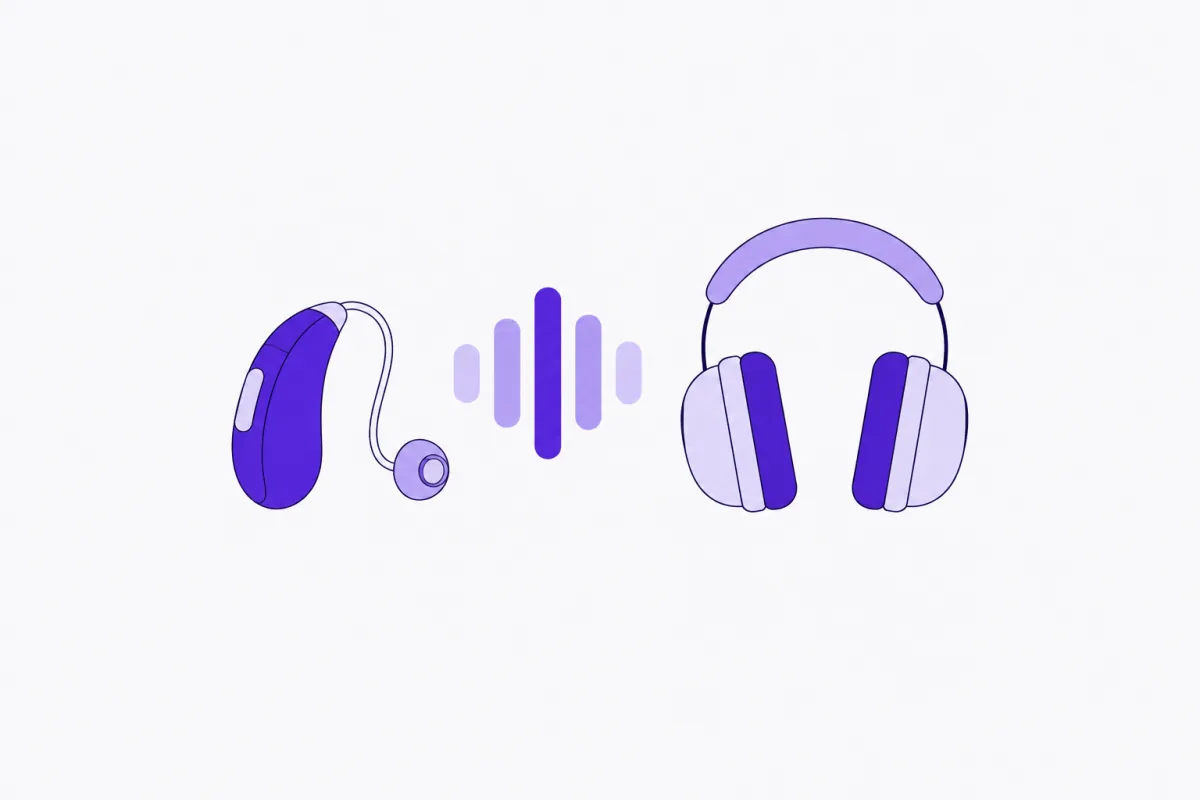
An audiologist running a hearing evaluation is in the booth with the door shut, a patient in headphones, pressing a button at each tone. Nobody is going to answer the phone in the middle of that, which is why an AI receptionist for audiology clinics is worth a look. In a small practice, the person at the front is often checking in the next patient, swapping a receiver on someone's aid or explaining a repair invoice.
So the calls stack up. A new patient referred by their ENT wants a hearing evaluation. A long-time wearer's aid has gone quiet and they want to know whether it's the wax guard or a repair. Someone else asks whether you keep size 13 batteries. An AI receptionist answers all of them, and the test carries on.
Can an AI receptionist answer the phone for an audiology clinic?
Yes. Aiva Chat answers every call on the first ring, 24 hours a day, in 13 languages, and handles the practical work of an audiology front desk. It explains your services and fees, answers battery and dome questions, and books, moves and cancels appointments during the call. Bookings go into its own calendar, synced with Google Calendar so your own events block times.
It answers only from the information you give it: your services, prices, hours, policies, FAQs, uploaded documents and website pages. It doesn't interpret audiograms, recommend a hearing aid style or decide whether a symptom is serious. Anything clinical is transferred to an audiologist or logged for a callback.
Aiva Chat has no HIPAA certification. It's for scheduling and practical questions, and a US practice should check its own health-privacy obligations first. Our security page explains how call data is handled.
What callers to an audiology practice usually ask
- "I've been referred for a hearing test." The assistant books a comprehensive hearing evaluation, with the audiologist and the booth, and tells the patient what to bring, such as the referral letter and a list of medications.
- "My hearing aid has stopped working." It reads back your troubleshooting basics if you've written them (change the battery, swap the wax guard, check the dome), then books a clean-and-check or a repair drop-off.
- "Is my repair back yet?" It can't see your repair log. It explains your usual turnaround and creates a follow-up task so someone calls back with the status.
- "Do you have 312 batteries and medium domes?" It answers from the list of sizes and prices you keep, and says whether patients can call in for them without an appointment.
- "I'm thinking about hearing aids. What happens?" It explains your hearing aid evaluation, how long it takes and what it costs, and that the audiologist recommends a device after testing.
- "How long is the trial period?" It explains your trial length and return policy in your wording, every time the same way.
- "I need new earmolds." It books an impression appointment of the right length.
- "Can I bring my husband?" It confirms your policy. Many practices encourage a family member at the hearing aid evaluation, and the assistant can say so if you've written it.
- "Do you take my insurance?" It says which plans and benefit programmes you work with, from your list. It can't check an individual's coverage.
- "I woke up and can't hear in one ear." That's not a booking. It follows your urgent rule and hands the call to a person.
How booking works for audiology
An audiology diary mixes long diagnostic appointments with quick drop-ins. Here's how that maps onto Aiva Chat's booking features.
One service per appointment type. Each service has its own length, price and buffers. A comprehensive evaluation might be 60 minutes, a hearing aid evaluation 90, a fitting 60, a follow-up adjustment 30, a clean-and-check 15 and a repair drop-off 10. A buffer after each fitting gives the audiologist time to finish notes and programming.
People and equipment together. Add each audiologist and hearing aid specialist as a team member with their own hours and time off. Add the sound booth, and the real-ear measurement setup if you have only one, as resources. A service can need a person and a resource, so a diagnostic test is only offered when the booth is free. Patients who want their usual audiologist can ask by name.
Days a service is offered. If paediatric testing only happens on Tuesdays, or earmold impressions only on the days your specialist is in, limit each service to those days.
Several offices. A practice with satellite offices adds each as a location with its own hours. The booth at one office doesn't block the booth at another.
A waitlist for evaluations. When new-patient evaluations book out weeks ahead, a waitlist offers a cancelled slot to the next person by email.
Approval first. If you want to see a referral before confirming certain appointments, such as a vestibular assessment, turn on approval for that service. The booking waits until you accept it.
Intake on the booking page. Your public booking page can ask your own questions, such as who referred them and whether they wear aids now, plus a consent box.
Video or phone follow-ups. Some follow-ups, such as a check-in after remote programming, can be phone or video appointments. Video bookings get a Google Meet link through the calendar.
Confirmations and reminders go by email, each with a personal link to confirm, move or cancel. Texting is paused for now while US carrier registration (A2P 10DLC) is completed.
A sample call
Caller: Hi, my right hearing aid's gone really quiet since yesterday.
Aiva Chat: Sorry to hear that. Our audiologists suggest changing the wax guard first. Have you had a chance to try that?
Caller: I don't have any left.
Aiva Chat: We keep wax guards for most models at the front desk, $12 a pack, and you can collect them without an appointment between 9 and 5. If a new guard doesn't help, I can book a clean-and-check.
Caller: Let's book it, just in case.
Aiva Chat: I have tomorrow at 11:15 AM or 2:30 PM, 15 minutes with our hearing aid specialist.
Caller: 11:15. And it's just quieter, not gone completely.
Aiva Chat: Thanks. I've booked tomorrow at 11:15. You'll get an email confirmation with a link to move it. If your hearing itself changes suddenly, please call us back straight away or contact your doctor.
What it shouldn't handle
- Sudden hearing loss, ear pain, discharge or dizziness. These aren't routine bookings. Write the exact words you want said, turn on the emergency handoff and set a transfer number.
- Test results and device advice. It won't explain an audiogram or say which hearing aid suits a patient. That's the audiologist's job after testing.
- Repair and order status. It can't see your repair log, manufacturer portals or orders. It takes the details and creates a follow-up task.
- Payment and coverage. Aiva Chat takes no payments. It quotes your prices and explains your payment options as written; your team takes payment and can mark a booking as paid.
- Callers who want a person. They're transferred, or logged for a callback if nobody answers.
During opening hours you can have your desk phones ring first, so the assistant only takes the calls nobody can reach. If a transfer isn't answered, it takes a message and creates a follow-up task. Every call has a recording, transcript and summary in the dashboard, and the live call monitor lets you listen, whisper or take over.
Setting it up for an audiology practice
- Write your clinical boundary. No advice on symptoms, results or devices, plus the exact words for sudden hearing loss and other urgent calls.
- Add your services. Evaluations, hearing aid evaluations, fittings, follow-ups, clean-and-checks, repair drop-offs, impressions and tinnitus consultations, each with its length, price, buffers and days.
- Add your team, booth and offices. Audiologists and specialists with their hours, the booth and other single pieces of equipment as resources, and each office as a location.
- Write the supplies list and policies. Battery and dome sizes you keep, prices, walk-in collection hours, trial period, warranty and repair turnaround, loaner policy and insurance wording.
- Connect phone, calendar and handoffs. Your Twilio number, OpenAI key and Google Calendar, plus transfer numbers and whether desk phones ring first.
- Test like your patients. Call as a referred new patient, a wearer with a quiet aid, someone asking about repair status and someone with sudden loss. Check each lands where it should.
What it costs
Plans are $49, $99 or $199 a month, and every plan includes every feature; they differ in limits like phone numbers and how many calls are answered at once (2, 5 or 20). Call minutes are billed by Twilio and AI usage by OpenAI on your own accounts at their published rates, with no Aiva Chat markup. There's a 14-day free trial with no card required. See pricing for the limits on each plan.
For a wider look at hearing clinics, including accessible ways for patients to book and a catalog of accessories, see our guide to AI receptionists for hearing clinics. Practices that test children may also find the paediatric clinics guide useful, and the occupational therapists guide covers another referral-led practice. Aiva Chat for clinics shows the wider setup.
Ready to keep the booth door shut?
Call the demo line on +1 (970) 972-0974 and ask to book a hearing evaluation, then tell it your aid has gone quiet and see what it suggests.
If it suits your practice, start a 14-day free trial with no card, add your services and booth, and point a quiet morning's calls at the voice agent. If you'd rather set up the booth and offices with someone, book a demo.
See how it works: the Aiva Chat AI receptionist
Written by
Shyamsinh Parmar
AI Solutions Architect
Shyamsinh designs production AI systems at Woyce AI, the team that builds Aiva Chat, including the real-time voice architecture behind it. Shyamsinh works from the business process down: where AI should act, what needs a person, which models to use, and what each call costs to run.
More posts